The UAE's commercial interior fit-out market is one of the most dynamic in the world. With a constant pipeline of new office towers, retail destinations, hospitality venues, and free zone developments, demand for quality fit-out work remains high — and the brief is changing. Clients who once prioritised speed and cost above all else are increasingly specifying sustainability, flexibility, and wellbeing as primary requirements. Understanding what is driving these changes helps both building owners and fit-out contractors deliver spaces that perform over their full lifecycle, not just on handover day.
Here are the six trends reshaping commercial interior fit-out across Dubai, Abu Dhabi, Sharjah, and the wider UAE in 2026.
1. Biophilic Design Is Moving From Accent to Architecture
Biophilic design — the integration of natural elements into the built environment — has been a feature of UAE fit-outs for several years, but it was largely decorative: a living wall here, a planter there. What is different now is that biophilia is being designed into the architectural fabric of the space rather than added as a finishing layer.
This means natural light strategies that go beyond standard glazing — light wells, solar tubes, and reflective surface positioning that bring daylight deep into floor plates. It means acoustic design using natural materials — timber battens, cork panels, woven natural fibre ceilings — rather than purely synthetic absorption products. And it means water features engineered into reception areas and atriums as ambient sound elements rather than purely decorative installations.
The evidence base for biophilic design in commercial spaces is strong: research consistently shows reduced occupant stress, lower absenteeism, and higher reported productivity in environments with strong natural connections. For UAE tenants — many of whom work in sealed, air-conditioned buildings for most of the year — this has particular relevance. When the outdoors is 45°C, the quality of the interior environment matters more than almost anywhere else.
2. Agile and Activity-Based Workspaces Are Replacing Fixed Layouts
The shift from assigned desks to activity-based working (ABW) — where employees choose their workspace based on the task at hand — accelerated globally after 2020 and has arrived firmly in the UAE. This is reflected in fit-out briefs that call for a diversity of space types within a single floor plate: focus pods for deep individual work, collaboration zones for team working, informal lounge areas for casual exchange, and videoconferencing suites designed for hybrid meeting scenarios.
The fit-out implications are significant. Partitioning systems must be reconfigurable rather than permanent — operable wall systems and demountable partitions are specified far more frequently than traditional gypsum construction in new-build commercial fit-outs. Furniture is treated as infrastructure, with wire management, power access, and acoustic properties specified at the same level of rigour as fixed elements.
For UAE clients, there is also a practical consideration around lease flexibility. With free zone and commercial lease terms in Dubai and Abu Dhabi ranging from one to five years, tenants are understandably reluctant to invest in permanent fit-out that cannot be adapted or relocated. Agile, demountable fit-out is both philosophically and commercially aligned with how the market leases space.
Design for the sublease scenario: A growing proportion of UAE fit-out clients now explicitly require that their fit-out be designed for subletting — where part of the floor can be separated and operated as a self-contained unit. This drives decisions about partition systems, utility sub-metering, and access control that should be made at the brief stage, not as afterthoughts.
3. Sustainability Credentials Are Now a Procurement Requirement
The UAE's Net Zero by 2050 commitment, combined with Expo 2020's legacy focus on sustainability, has pushed green building credentials from aspirational to required on a growing proportion of commercial fit-out projects. LEED (Leadership in Energy and Environmental Design) and BREEAM certifications are now specified as contract deliverables on major government, developer, and multinational tenant projects — not just as marketing claims.
For fit-out contractors, this translates into concrete changes in how materials are specified and sourced:
- Low-VOC finishes: Paints, adhesives, sealants, and flooring specified to emit minimal volatile organic compounds, improving indoor air quality and contributing to LEED EQ credits
- Recycled content materials: Carpet tiles, acoustic panels, and ceiling products with documented recycled content percentages
- Locally sourced materials: Products manufactured within the UAE or Gulf region, reducing transportation emissions and supporting the regional supply chain
- Timber from certified sources: FSC or PEFC certification required for all timber used in joinery and furniture
- Energy-efficient lighting: LED throughout, with daylight-responsive dimming controls and occupancy sensors as standard
Contractors who cannot provide material data sheets, Environmental Product Declarations (EPDs), and installation waste diversion records are increasingly unable to compete on sustainable fit-out projects. This is driving a fundamental shift in procurement and supply chain management across the industry.
4. Smart Building Technology Is Being Built Into Fit-Out From Day One
The line between MEP engineering and interior fit-out is blurring as smart building technology becomes standard in UAE commercial specifications. What was once an IT infrastructure question is now a fit-out question: occupancy sensors, desk booking systems, air quality monitors, smart lighting controls, and energy sub-metering all need to be coordinated with the interior design and construction programme.
This has two practical implications for clients. First, the fit-out contractor and the technology integrator need to be working from the same design from the outset — not introduced to each other at practical completion. Second, the ceiling and wall construction details matter far more when sensors, speakers, and displays need to be integrated flush and coordinated with the aesthetic. Contractors who are experienced in integrated smart fit-out can save significant rectification cost compared to those who treat technology as a separate sub-contract.
In the UAE specifically, the government's Smart Dubai and Abu Dhabi Vision initiatives have established IoT-ready infrastructure in many new commercial districts, which means building operators can connect their interior smart systems to city-level data platforms — energy benchmarking, environmental monitoring, and predictive maintenance become more accessible than in many comparable global markets.
5. Luxury Material Combinations Are Redefining Premium UAE Interiors
UAE clients at the premium end of the commercial market have always had high expectations for material quality, but the nature of what reads as "luxury" is evolving. The oversaturated marble-and-mirror aesthetic that characterised many 2010s commercial interiors is giving way to more textured, layered material combinations that draw on both regional heritage and global design trends.
Current combinations that are gaining traction in UAE commercial fit-outs include:
- Micro-cement and raw steel: A tactile, industrial-influenced palette that reads as sophisticated rather than rough when combined with precision lighting and quality furniture
- Fluted glass and brushed brass: A softer version of the glass-and-metal combination that remains popular in UAE hospitality and is crossing into high-end corporate
- Terrazzo resurgence: Bespoke terrazzo — with UAE-specific chip compositions and regional stone — as statement flooring and reception surfaces
- Natural stone beyond marble: Travertine, quartzite, and basalt are being used as alternatives to the ubiquitous white marble, offering more textural variation and, in some cases, better durability in high-traffic areas
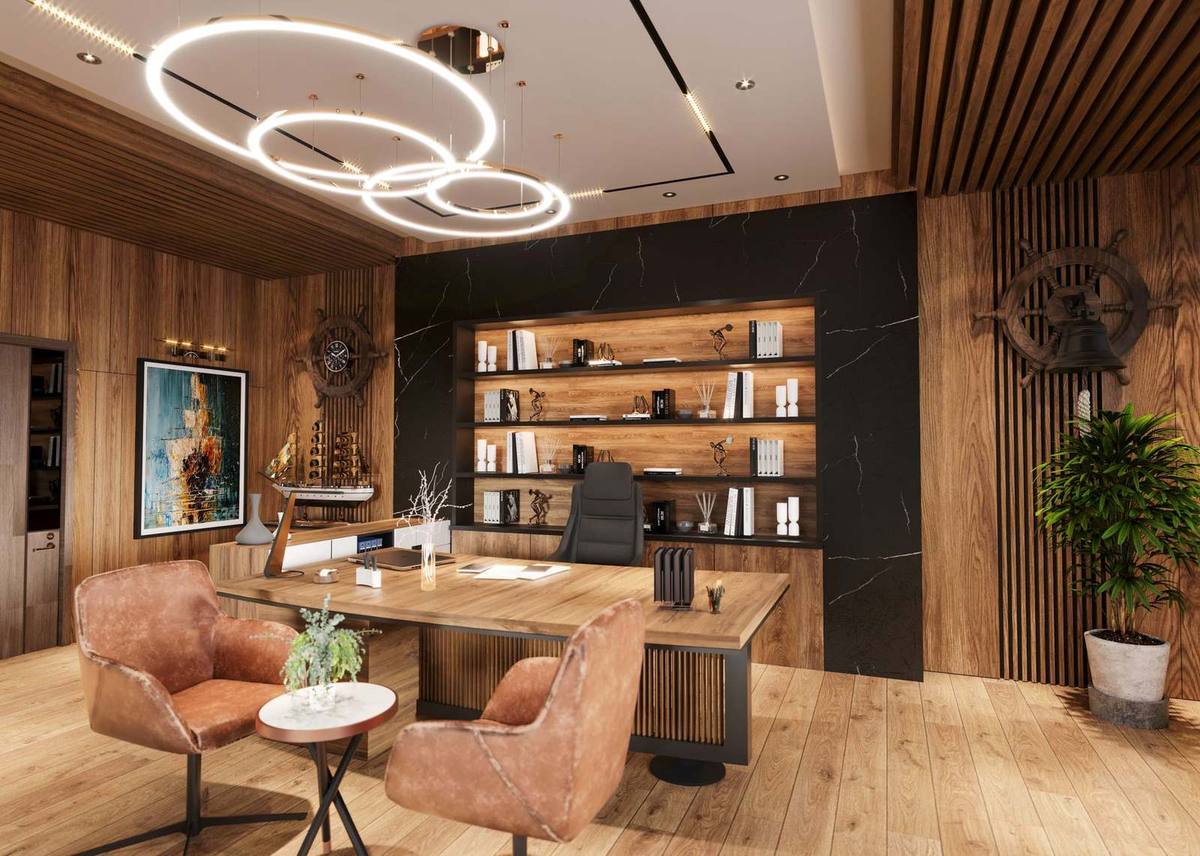
- Timber in unexpected applications: Timber ceilings, timber structural elements, and timber acoustic baffles bringing warmth to commercial spaces that are typically dominated by metal and glass
6. Programme Compression and Fast-Track Delivery Are Non-Negotiable
The UAE commercial market has always demanded fast delivery, but the pressure on handover timelines has intensified. Tenants in free zones are often committing to operational start dates before they have signed a lease — and fit-out timelines that might be considered aggressive in other markets (12 weeks for 1,500 sq m of Grade-A office fit-out, for example) are routine in Dubai and Abu Dhabi.
Delivering to compressed programmes without quality failures requires contractors who can:
- Mobilise a full site team within days of appointment
- Source all materials from pre-qualified UAE-based suppliers rather than waiting for international lead times
- Run MEP rough-in, partitioning, and ceiling installation concurrently rather than sequentially
- Have authority submission experience to ensure fit-out permits are not programme-critical
- Maintain quality control on night shifts and weekend working without the defect rate that typically accompanies acceleration
For clients, the implication is that the cheapest tender price rarely delivers the fastest programme. Contractors with established supply chains, retained site teams, and programme management experience charge a premium — but the cost of a one-week delay on a fit-out where the tenant is already obligated to begin operating is almost always greater than that premium.
What This Means When Briefing a UAE Fit-Out Contractor
The trends above point to a brief that is becoming more complex, more multi-disciplinary, and more tightly specified than it was five years ago. Clients who want to benefit from biophilic design, LEED compliance, smart technology integration, and premium material quality within a compressed programme need to engage a contractor who can manage all of those threads simultaneously — not a low-cost executor who manages each element in isolation.
The most important questions to ask at brief stage:
- Have you delivered LEED-certified fit-outs? Can you provide the certification documents?
- Do you have in-house MEP engineers, or do you sub-contract all services coordination?
- What is your typical procurement programme for long-lead items, and who manages authority submissions?
- Can you provide three references from tenants who occupied within the agreed programme?
- What warranty do you provide on joinery, flooring, and ceiling systems specifically?
A contractor who can answer all of these confidently — with documented evidence — is positioned to deliver a fit-out that performs for the life of the lease, not just the handover inspection.
Planning a commercial fit-out in the UAE?
Bagga Technical Services LLC delivers turnkey office and retail fit-outs across Dubai, and the UAE — partitions, ceilings, flooring, joinery, and MEP coordination under one contract.
Discuss Your Fit-Out Brief